
The Pasadena Photography Arts
PHOTO AWARD 2026
August 21, 2026
We are thrilled to announce that the 2026 PPA Photo Award has been granted to Roland Hartley for his project
Mezcal: Ancestral Fire
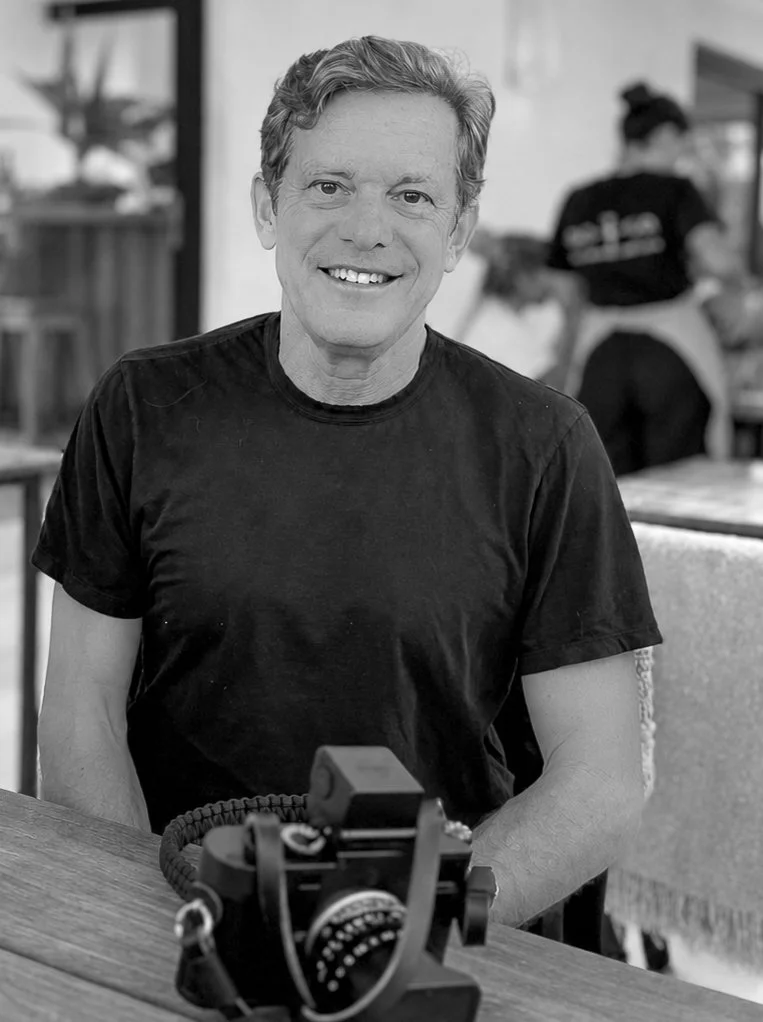
Roland Hartley is a photo-based artist and alternative-process printmaker based on a farm at the foot of Virginia’s Blue Ridge Mountains, where he raises grass-fed Piedmontese cattle. He completed the Photography Foundations Intensive at the International Center of Photography and studied platinum-palladium printing at ICP and with Tricia Rosenkilde. His platinum prints have appeared in group exhibitions across the United States and in The Hand. This year he received the John Chervinsky Emerging Photographer Scholarship from the Griffin Museum of Photography, where his first solo museum exhibition, The Fall Line, opens in December 2026.
Before turning to photography, Roland spent years in global commodity trading, traveling through remote landscapes and observing how rivers, mountains, and trade routes shape settlement, agriculture, and industry. Those experiences inform a practice concerned with how geography and history encode power, memory, and belonging. He is drawn to places where the past lies buried in plain sight and to communities preserving ways of life threatened by erasure.
His photographs examine hidden geographies that shape how we build, remember, belong, and live on the land.
Roland’s award winning project is featured below alongside an exclusive interview with guest juror Craig Krull, historian and gallerist. And we were so pleased to host Roland on PPA FORUM on Wednesday, September 23rd at 5 PM PDT for a VIRTUAL artist talk where Roland shared the story behind his project. Recording coming soon.
Toño and Coco
STATEMENT
I entered a shed in Santa Catarina Minas, a dusty hamlet set among the agave fields of central Oaxaca. Wood fires burned beneath clay pots. Smoke rose from a pit cut into the earth. This was a palenque—a traditional mezcal distillery.
People arrived from across the village carrying flowers and candles for a makeshift altar. At its center sat the small, bejeweled figure of El Niño. They had come for the annual blessing of Palenque El Conejo, held on St. Valentine’s Day to bless the coming year’s harvest. As darkness fell, frankincense smoke drifted through the open-sided shed. A young brujo—a spiritual guide—knelt before the candlelit altar and led the gathering in prayers and songs rooted in centuries of tradition.
The blessing was not a prelude to the work; it was part of the work. It bound the spiritual to the physical across generations: roasting the agave, crushing the cooked piñas, fermenting their fibers and juice, and distilling the liquid in clay pots over open fires. The methods I witnessed are thought to have been brought to Mesoamerica by Spanish monks. Here, “ancestral” names more than a production category; to me, it suggests resistance and continuity.
Maestro mezcalero Antonio Carlos Martínez—El Conejo—is the steward of that tradition. He produces ten mezcals from different agaves, entirely by hand. His fifteen-year old son Gabriel intends to follow him. When I photographed the uncovering of the roasted piñas, Gabriel and his younger brother Toño, nine, threw themselves into the work, chasing each other around the palenque as they shoveled earth from the pit and pulled back the tarps. Their play was inseparable from the work, just as family was inseparable from production.
In a world of industrial spirits and consolidated production, El Conejo and his family continue this tradition on their own terms. My photographs attend to that continuity—not as a relic of the past, but as a living expression of skill, family, and will.
Espadín Agave Spears
THE INTERVIEW
[Craig] What do you like about black and white photography, and why did you choose it for this project? I noticed that some of your other work is in color.
[Roland] This may sound strange coming from a photographer, but I tend to dream in black and white, so perhaps it’s simply how my brain is wired. But the choice was also deliberate.
Lisa Volpe, curator of photography at the Museum of Fine Arts, Houston, recently asked me a question I keep returning to: “How do you want your project to speak to history?” At Palenque El Conejo, I was photographing a tradition that reaches back four hundred years. The methods, rituals, and involvement of family and community have survived across generations. I wanted the photographs to register that history rather than appear rooted only in the present moment.
Monochrome is an artifice—it doesn’t represent the world as we ordinarily see it—and that is what makes it so useful. It can act as a portal between past and present. We tend to read black and white as historical, whereas color, for me, speaks in the present tense.
Uncovering the Piñas
Piñas Exposed
[Craig] I assume the images are pigment prints because they were captured digitally. Do you ever use film and a darkroom?
[Roland] The choice of black and white was also connected from the outset to the form I ultimately want the project to take: platinum prints. For this reason, and for the majority of my work I use a monochrome digital camera rather than film.
My camera has an extraordinary dynamic range, which allowed me to work inside a shed lit largely by wood fires. Many of the photographs were made at 12,500 ISO. At that sensitivity, my monochrome sensor imparts a rich, filmic quality rather than simply causing the image to fall apart.
From those digital files, I make full-size negatives that are contact-printed by hand in platinum palladium. In that sense, my process reverses the more familiar hybrid workflow in which someone photographs on film, scans the negative, and then prints digitally. I begin digitally and end with a handmade photographic object.
So far the Mezcal project exists only as a zine, which my friend David Alan Harvey helped me edit. I have not yet produced the final platinum prints. Each platinum print is subtly different, and that uniqueness is central to what I want the finished work to be.
Sleeping Dog
[Craig] How did you find the subjects in this project? Were they pleased with your interest? Have you shared the results with them and what has been their reaction?
[Roland] I was fortunate to count Mary Ellen Mark among my friends, and she once gave me an unvarnished scolding: I had lived in Mexico as a teenager, done business there for years, and yet had never visited Oaxaca, which she considered unforgivable.
Years after Mary Ellen passed, I finally heeded her advice and enrolled in the Oaxaca workshop she taught for many years, now led by Alex Webb and Rebecca Norris Webb. As a farmer, I wanted to photograph something connected to food or agriculture. Alex and Rebecca introduced me to Fernando Armenghol, a wonderful Oaxacan photographer who knew several mezcaleros in Santa Catarina Minas, about an hour outside the city. We got into his car, and I was transported into another world.
El Conejo and his family were extraordinarily generous. They welcomed me into their home and allowed me to photograph their work and family life. I sent him prints a few months ago but haven’t yet heard what he thinks. I would rather have that conversation in person anyway, when I return early next year.
Maestro Mezcalero Rolando at Rest
[Craig] Once the making of photographs started, how did you "manage" the interactions with your subject? How did the sequence unfold? They seem natural and your process unobtrusive.
[Roland] There was very little to manage. The palenque had its own rhythm—work, play, family, neighbors—and my task was simply to step into that flow and let it carry me. I wasn’t directing people or asking them to repeat things; I was responding to what unfolded.
One detail still astonishes me: among more than a thousand frames I made in Santa Catarina Minas, not a single person was staring at their phone.
Flowers and Candles
[Craig] Did the makers of the mezcal talk about the distinctive characteristics and tastes of their production? I have followed some mezcal makers and there are unique varieties and styles just like Single Malt Scotch.
[Roland] Yes—and, as with whisky or wine, you can go very deep. Oaxaca is home to an extraordinary diversity of agave, but with mezcal, terroir matters every bit as much as the species.
El Conejo works entirely by hand: the piñas are roasted in a stone-lined pit buried under earth, pounded with wooden clubs, and distilled in clay pots over an open fire. Every step leaves its mark on the flavor. It isn’t only which agave he uses; even the choice of firewood shapes the character of the smoke.
What surprised me most was the restraint. The smokiness was subtle and integrated, unlike some export mezcals I had tasted, in which the smoke tends to dominate.
Work is Play
Preparation of the Altar
[Craig] If you had expectations or goals in the making of these images, were they fulfilled or did the project reveal itself in any unexpected ways?
[Roland] I usually approach a project analytically. My mind goes into overdrive: How many plants per hectare? How long do they take to mature? How much mezcal does each piña yield? What are the production and distribution systems? What is the history? Then I wonder how to get all of that into photographs.
But when I arrived in Santa Catarina Minas and saw rows of silver agaves shimmering in the heat, something shifted. Facts and figures gave way to feeling. I became attuned to the warmth of the people who were allowing me to witness and record their lives.
The unexpected lesson was that I didn’t need to force all that information into the pictures. Responding to the people, rather than analyzing the process, became a gateway to a more humanist kind of photography.
Blessings
[Craig] Are you aware of the lines between raw documentation and aesthetic choices in your work? Is there a balance?
[Roland] A photograph may document what stood before the camera, but it is also shaped by selection—where I stand, what I include, and the instant I choose. I don’t see documentation and aesthetic choice as opposites; the question is whether the aesthetic choices serve the subject.
This story is about love, family, and community. I didn’t want merely to record what I saw. Somewhere in the flow of things, I began photographing what I felt, and I hope that is what comes across.
The Brujo
[Craig] What is the strongest and most successful aspect of this project, and do you recognize a weak moment or one that you could have handled differently in retrospect?
[Roland] The strongest aspect of the project is its sense of energy and intimacy, particularly in the photographs of the boys working. Their joy and determination became the emotional center of the series.
In retrospect, I wish I had made more environmental portraits and spent more time in the village. I’m also working at becoming more adept with portrait lighting and I’d like to explore that in the portraiture. I’m returning in 2027 to continue the project, which will give me a chance to broaden its scope and add some of that missing context.
Santa Catarina Minas, Oaxaca
[Craig] Thank you for sharing these images. The region of Oaxaca has been high on my travel list. I have a few connections with the area and in fact, I hosted an exhibition, LA/Oaxaca, at my gallery a couple years ago.
[Roland] Thank you, Craig, for your support and enthusiasm for the project. I’m planning to return early in the new year. ¡Vamos!